RMIT Bachelor of Fashion (Design): A Melbourne Degree for Students Who Want to Make, Develop and Present Collections
If you are drawn to clothing, materials, visual storytelling and turning an idea into something wearable, Fashion Design is not simply about sketching a collection. You also need to understand bodies, garment construction, textiles, research, visual communication and how work is presented and assessed.
RMIT offers the Bachelor of Fashion (Design), a three-year full-time program at its Brunswick campus in Melbourne.[1] It is studio-based and places students in a creative environment with designers, practitioners and academics; learning includes garment construction, materials, textiles and design practice.[1]
What will you study?
First year establishes foundations in textile materials, Fashion Design Studio and Fashion Design Digital Studio.[2] This means you do not only develop concepts by hand: you also begin building digital ways of working and understanding the materials that shape the feel, structure and function of a garment.
In second year, the program structure lists Transform Fashion Design Materials, Fashion Communication Design, Fashion Design Partnered Project and Fashion Design Reuse.[2] This combination suits students who see fashion as a blend of creativity, communication, industry collaboration and attention to material reuse.
Third year focuses on Fashion Design Persona Project, Fashion Design Strategies and Environments, and Fashion Presentation Design.[2] At this point, the aim is not to copy someone else’s style, but to develop a design direction and portfolio that show your own creative and technical decisions.
Studio learning, portfolios and industry experience
RMIT says students build a portfolio reflecting their creative direction and technical skill by designing, making and developing garments and concepts.[1] The degree also describes projects, placements and case studies with industry and community partners as ways to connect work with real contexts.[1]
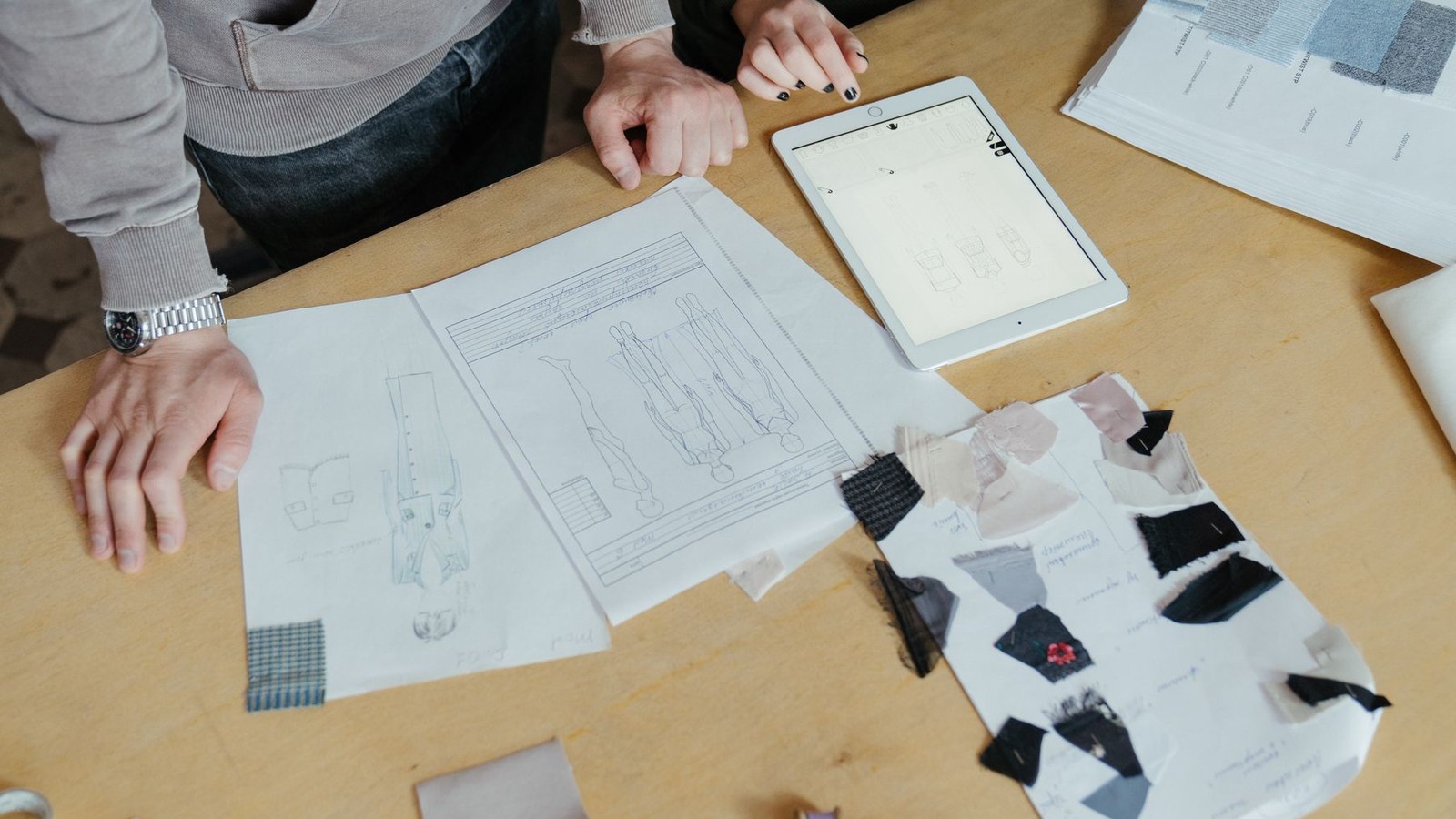
A portfolio matters because it shows process, not only a final photograph. Keep sketchbooks, reference research, fabric experiments, patterns, samples, corrections and the reasons behind design choices. This habit also helps with a selection task or a creative interview.
Minors and directions of interest
RMIT says students can choose a minor in textile design, enterprise or sustainable innovation.[1] In the program structure, Fashion Enterprise includes topics such as business models, consumer dynamics, enterprise creation and brand management.[2]
These choices can support different directions:
- **Textile and material practice:** for students interested in fabric, material and surface experimentation;
- **Fashion enterprise:** for those wanting to understand brands, consumers and creative business;
- **Sustainable innovation:** for students exploring materials and more responsible design practices.
A minor does not guarantee a particular profession. Use it to strengthen the kind of work and questions you genuinely want to develop.
Who is this degree for?
This degree suits students who enjoy iteration: making, receiving feedback, revising and making again. Drawing ability helps, but it is not the only starting point. Attention to detail, curiosity about visual culture, hands-on confidence and willingness to document a process matter just as much.
RMIT lists a selection task for this degree.[3] As its format, deadline and requirements can change, build a portfolio early and check RMIT’s current instructions for your intended intake. For international students, RMIT currently lists February and July intakes; the 2026 fee and Semester 1 2027 deadline should be reconfirmed directly before you make a decision.[1][3]
RMIT also lists a pathway from the Associate Degree in Fashion (Design and Technology stream), shown as 3.5 years full-time in the standard-pathway example.[4] Eligibility and credit recognition must be confirmed directly with RMIT.
Want to assess whether RMIT Fashion Design matches your portfolio, minor choices and Australian study goals? Contact RIM Education for an initial consultation: https://rimeducation.com/en/contact-us
Sources
[1] https://www.rmit.edu.au/study-with-us/levels-of-study/undergraduate-study/bachelor-degrees/bachelor-of-fashion-design-bp328 — Bachelor of Fashion (Design) | RMIT University
[2] https://rmit.edu.au/study-with-us/levels-of-study/undergraduate-study/bachelor-degrees/bachelor-of-fashion-design-bp328/bp328ausbr — Bachelor of Fashion (Design) Program Structure | RMIT University
[3] https://rmit.edu.au/study-with-us/levels-of-study/undergraduate-study/bachelor-degrees/bp328/apply-now — Bachelor of Fashion (Design) Apply | RMIT University
[4] https://rmit.edu.au/study-with-us/levels-of-study/undergraduate-study/bachelor-degrees/bachelor-of-fashion-design-bp328/pathways — Pathways into Bachelor of Fashion (Design) | RMIT University