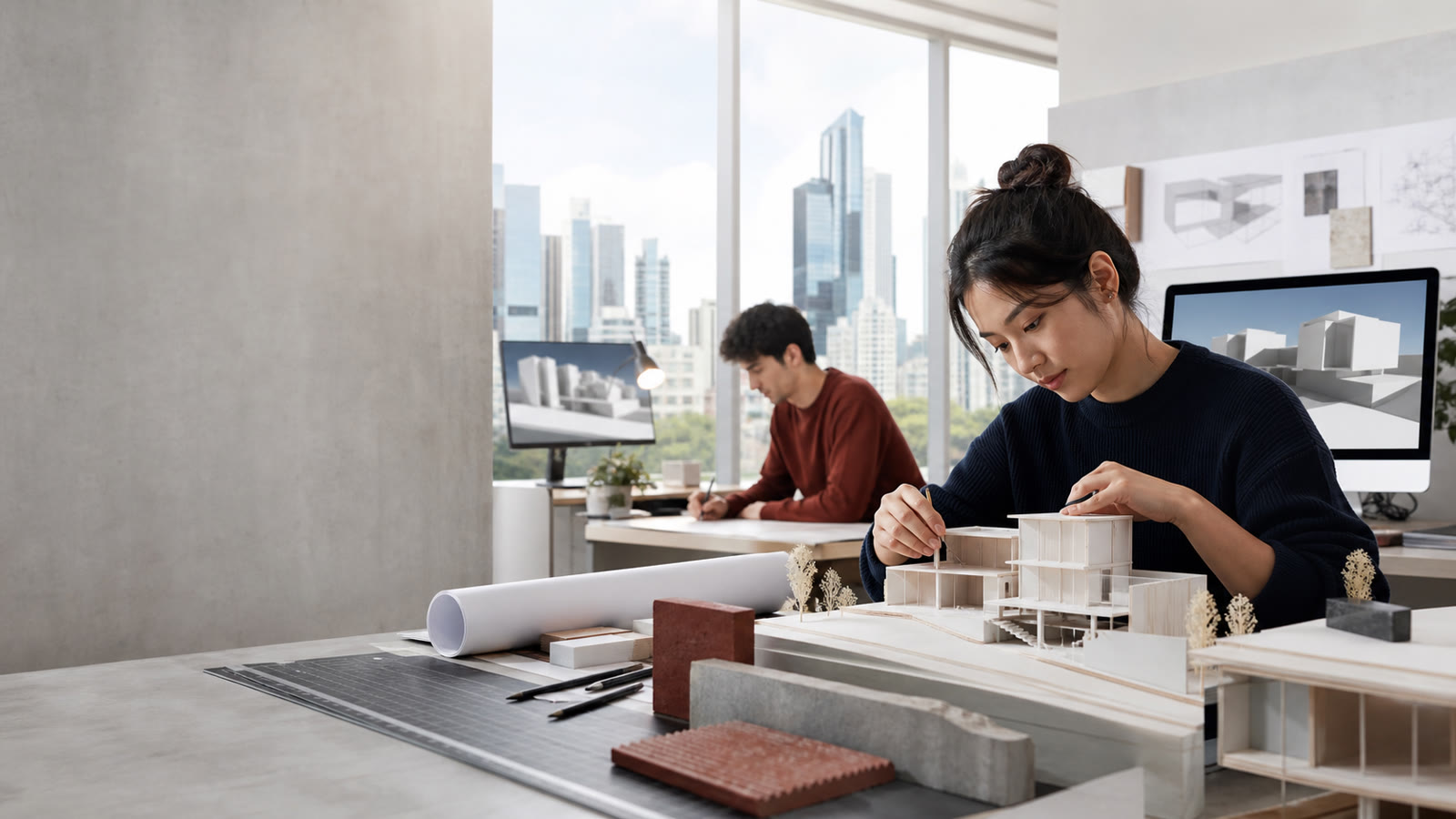
Architecture is about more than creating visually impressive buildings. It brings together creativity, technology, spatial understanding, and sensitivity to how people live. For students who want to learn through exploration and real projects, RMIT University's Bachelor of Architectural Design offers a studio environment modelled on professional design practice.
About RMIT's Bachelor of Architectural Design
The Bachelor of Architectural Design, program code BP250, is a three-year full-time undergraduate degree delivered at RMIT's Melbourne City Campus. International students may commence in February or July. The indicative annual tuition fee for 2027 is AUD 52,800 and remains subject to university review.
The degree develops a rich understanding of architecture alongside practical skills valued in the profession. From the first semester, students work actively in design studios, drawing, developing two- and three-dimensional designs, making models, testing materials, and communicating ideas through visual, spoken, and written media.
Program summary:
Duration: three years full time
Location: Melbourne City Campus
Intakes: February and July
Indicative 2027 fee: AUD 52,800 per year
Program code: BP250 | CRICOS: 060830J
Study at Australia's Leading Design University
RMIT's strength in creative disciplines is reflected in the QS World University Rankings by Subject 2026. RMIT is ranked first in Australia and 15th globally for Architecture and Built Environment. It is also first in Australia and equal 19th globally for Art and Design.
These results are especially relevant because RMIT's architecture degree sits within a powerful design ecosystem. Students explore buildings not simply as objects but through the social, cultural, technological, and environmental contexts that shape space. They learn from academics, award-winning architects, industry practitioners, and visiting national and international experts.
Learning through the Design Studio
The design studio is central to the student experience and typically accounts for around half of each semester's study. Working intensively in small groups, students focus on a particular theme and project. After the first semester, they can select studios that align with their interests and emerging design direction.
This format encourages experimentation, challenges assumptions, and creates space for unconventional solutions. Learning takes place through repeated cycles of presentation, critique, feedback, revision, and reflection. Studio work may then be presented in a public exhibition at the end of the semester.
Supporting subjects cover technology, communication, history, and the social and physical contexts of the built environment. Together, these areas help students understand not only how a design is produced, but why design decisions matter and whom they affect.
Assessment is continuous and includes assignments, projects, presentations, essays, tests, and a portfolio of drawings and images. Students regularly explain their design decisions, respond to critique, and refine their work. This process develops creative resilience and communication skills that are essential when collaborating across disciplines or presenting ideas to clients.
Students also learn in facilities that support making and experimentation, including studios across the City Campus and the RMIT Design Hub. Access to studio spaces and technology helps ideas progress from initial sketches to physical models and digital visualisations, building a portfolio that demonstrates both process and an emerging design identity.
Industry Connections and Global Experience
RMIT Architecture has longstanding industry connections. Studios may be led by academic staff, practitioners from innovative design firms, or international architects. Students can work on real projects with community and industry partners and attend public lectures delivered by prominent architects and urban designers.
The degree also offers international exchange opportunities with universities in the United States, Europe, and Asia. Some design studios involve overseas travel or collaboration with international students and architecture practices. These experiences can broaden a student's design perspective while developing a valuable cross-border professional network.
Careers and the Path to Becoming an Architect
Graduates may work in architecture practices, urban design, or broader design roles that do not require professional registration. They develop the ability to generate concepts, critically examine architectural challenges, use computer-based architectural communication, and explain complex ideas to different audiences.
It is important to understand that this bachelor's degree is the first stage of the professional architecture pathway. Students must continue to a Master of Architecture to complete the required professional education in Australia. RMIT's specialist pathway combines the three-year Bachelor of Architectural Design with a two-year Master of Architecture. After completing the master's degree and the required professional experience, graduates can progress towards the architect registration process.
Preparing Your Application
Admission is competitive and includes a selection task. The required format depends on the applicant's educational background. Some candidates are asked to demonstrate design thinking through a visual response, proposal, project context, and development process. Applicants with previous design study may need to provide a motivation statement, academic transcripts, CV, and project folio. International students must also meet the applicable academic and English-language requirements.
Ready to Apply to RMIT?
Careful intake selection, requirement assessment, and focused preparation for the selection task can make your application journey much clearer.
Contact RIM Education for consultation and application support for RMIT University's Bachelor of Architectural Design.
Sources: RMIT University and the QS World University Rankings by Subject 2026 as published by RMIT. Fees, intakes, requirements, and rankings may change; always review the latest official information.