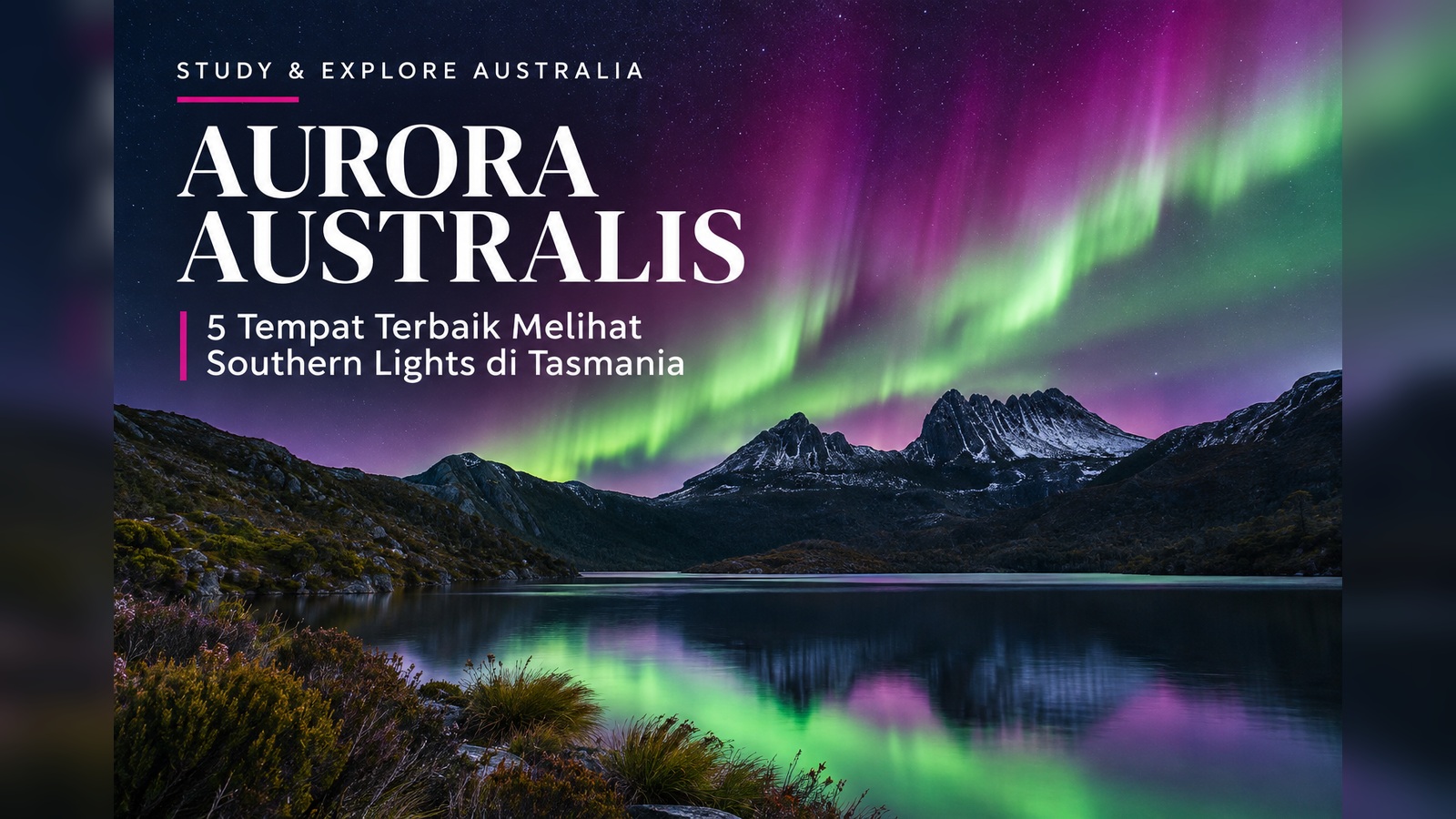
Aurora Australis in Tasmania: Five Southern Lights Locations to Explore While Studying in Australia
The Southern Lights, or Aurora Australis, can be one of the night-sky experiences that adds perspective to study life in Australia—especially if you have an opportunity to visit Tasmania. Tourism Australia highlights Bruny Island, Satellite Island, Cradle Mountain–Lake St Clair National Park, Bathurst Harbour and the Central Highlands as locations with open landscapes or settings that can support aurora viewing.[1] An aurora is a natural phenomenon, however, so travelling to one of these places does not guarantee a sighting.
What is Aurora Australis?
Aurora Australis is a natural light display in the southern sky. Viewing conditions are connected with space-weather and geomagnetic activity. The Australian Bureau of Meteorology’s Space Weather Services issues Aurora Alerts when favourable activity is in progress; Aurora Watches can provide lead times of up to 48 hours, while Outlooks can cover three to seven days in certain conditions.[2]
The best plan is therefore more than choosing a location. Check current aurora updates, weather forecasts and sky conditions before leaving. Have an alternative itinerary if cloud cover or activity does not cooperate.
1. Bruny Island: a quiet coastal horizon
Tourism Australia names Bruny Island as one of its Southern Lights locations in Tasmania.[1] Its coastal setting and open spaces can make it a considered weekend trip from Hobart, depending on the route and transport schedule you choose.
For students, it makes sense to treat the visit as a nature trip rather than an aurora-only mission. Plan transport and accommodation costs in advance, check current operator or park requirements, and do not sacrifice essential academic commitments for an uncertain forecast.
2. Satellite Island: an island experience that needs planning
Satellite Island also appears on Tourism Australia’s list.[1] As a smaller-island experience can involve more specific access and accommodation arrangements, it is better suited to a carefully budgeted trip.
If you hope to include it during your studies, compare the total cost, access and alternatives first. A destination is not a student necessity: living costs, academic needs and travel safety should remain the priority.
3. Cradle Mountain–Lake St Clair National Park: mountains and night sky
Cradle Mountain–Lake St Clair National Park is another location identified by Tourism Australia for Southern Lights viewing.[1] The area is widely known for its Tasmanian mountain landscape, making it worthwhile even if the aurora does not appear.
Before travelling, check access information, weather, suitable equipment and local safety rules. Mountain conditions and night travel require more preparation than an evening in the city.
4. Bathurst Harbour: remote nature is not a spontaneous trip
Bathurst Harbour is included in Tourism Australia’s list.[1] Its remote setting means it should be treated as a dedicated trip, not a last-minute plan after class.
For any future visit to a remote natural area, prioritise official operator information, weather, access, communications, equipment and safety planning. A strong nature experience starts with realistic decisions, not with pursuing a single photo.
5. Central Highlands: open horizons in the “Land of a Thousand Lakes”
Tourism Australia describes Tasmania’s Central Highlands as the “Land of a Thousand Lakes”, with lakes and open horizons that support Southern Lights viewing.[1] It is a useful reminder that international student life need not be limited to a city or campus: well-planned free time can also change how you get to know your study destination.
Check road conditions, weather, safe viewing spots and accommodation requirements before you go. Do not judge the quality of a trip solely by whether an aurora appears.
When and how should you monitor aurora conditions?
There is no guaranteed date for an aurora. Use Space Weather Services updates as one source for current conditions.[2] A higher K index is associated with a greater chance of aurora visibility at lower latitudes, but it does not guarantee a sighting from a particular location.[2]
In practice, you can:
- choose a location with an open horizon and dark skies;
- check aurora alerts, watches or outlooks alongside the weather forecast;
- prepare suitable clothing and transport for night conditions;
- prioritise safety and local rules;
- build a trip that remains enjoyable without an aurora.
How does this relate to study life in Australia?
Studying abroad is not only about classes; it also involves learning to make independent decisions about time, budgets, travel and expectations. A phenomenon such as the Southern Lights can inspire you to understand Australia more deeply, but your university choice should still be guided by programme fit, costs, location, student support and your study and career goals.
FAQ: Are international students guaranteed to see Aurora Australis?
No. International students can plan a Tasmanian trip around their schedule, budget and current travel requirements, but an aurora cannot be guaranteed. Geomagnetic activity, weather, surrounding light and location can all affect viewing opportunities.[2]
Plan your Australia study pathway with RIM Education
Would you like to compare universities, study cities and application preparation for Australia? Contact RIM Education to discuss a study plan that fits your goals.
Sources
[1] https://www.australia.com/id-id/things-to-do/nature-and-national-parks/where-to-see-the-southern-lights.html — Tourism Australia: 5 locations to see the Southern Lights
[2] https://www.sws.bom.gov.au/Aurora — Australian Bureau of Meteorology Space Weather Services: Aurora